

A Construction Machinery Alternator Supplier Offering Both Regulator Configurations
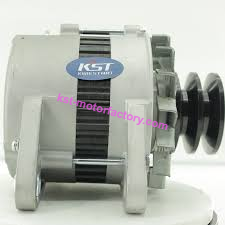
The voltage regulator serves as the brain of the charging system. It monitors battery voltage and adjusts the alternator's field current to maintain a stable output. This regulation prevents overcharging, which damages batteries and electronic components, and undercharging, which leaves equipment stranded. The regulator's placement—internal or external—affects installation complexity, maintenance access, and protection against environmental hazards. Internal regulators reside inside the alternator housing, sharing the unit's sealing and cooling. External regulators mount separately on the equipment frame or firewall, connected by wiring harnesses. Each configuration offers distinct advantages for construction machinery applications. So does a Construction Machinery Alternator use internal or external voltage regulators, and how does kst-motorfactory from KST address this design decision in its product range?
Internal regulators have become the industry standard for most modern construction equipment. The integration simplifies the wiring harness, reducing installation errors and potential connection points. The regulator resides within the sealed housing, protected from dust, moisture, and vibration. This protection proves crucial on construction sites where environmental hazards abound. The internal design also allows for precise thermal management, as the regulator shares the alternator's cooling airflow. Temperature-compensated regulation adjusts charge voltage based on ambient conditions, extending battery life. Kst-Motorfactory designs many of its models with internal regulators, matching the preferences of OEM equipment manufacturers who value simplified assembly and reduced component inventory.
External regulators remain relevant for specific applications. They offer flexibility in mounting location, allowing placement in cooler, less-vibratory areas of the machinery. This separation can extend regulator life in extreme conditions where the alternator itself runs hot. External regulators permit easier adjustment or replacement without removing the alternator from the engine. For machines with specialized charging requirements—such as dual battery systems or constant voltage applications—external regulators provide configuration options. Some older equipment models rely on external regulators, and replacement alternators must match the existing system. Kst-Motorfactory continues to supply external regulator models to support these aftermarket and legacy applications.
The choice between internal and external regulators affects maintenance practices. Internal regulators require removing the alternator for service, which may involve belts, brackets, and cooling lines. However, the frequency of regulator failure is low with modern solid-state designs. External regulators allow quick diagnosis and replacement without disturbing the alternator drive system. Technicians can test regulator output at the wiring harness connector, isolating the regulation circuit from the alternator itself. This accessibility speeds troubleshooting and reduces downtime, particularly valuable in remote job sites where equipment availability is critical.
Environmental sealing differs significantly between configurations. Internal regulators benefit from the alternator's overall IP rating, achieving protection against dust and water ingress. Kst-Motorfactory constructs its units to withstand construction site conditions. External regulators require separate enclosures and sealed connectors to achieve equivalent protection. Poorly sealed external regulators fail from moisture penetration or terminal corrosion. The choice of regulator location influences the overall system reliability in harsh conditions. Internal regulators typically offer an advantage in high-dust or wet environments.
Electrical performance characteristics also differ. Internal regulators have short, direct connections to the alternator rotor and stator, minimizing resistance and potential voltage drops. This proximity enhances regulation accuracy and response speed to load changes. External regulators involve longer wiring runs, which introduce resistance and require careful wire sizing to avoid voltage sensing errors. The sensing circuit, which measures battery voltage, must account for voltage drops in the charging path. Internal regulators simplify this design challenge. However, advanced external regulators with remote voltage sensing terminals can compensate for wiring losses, providing accurate regulation at the battery terminals.
The field control method determines how the regulator interacts with the alternator. Internal regulators typically employ digital voltage sensing with fast-switching transistors. External regulators, particularly older designs, may use analog circuits with relay or transistor control. Modern external regulators incorporate comparable digital technology. Kst-Motorfactory offers both types, providing technical documentation that clarifies the regulator specifications, wiring diagrams, and system integration requirements. This information supports correct installation and reliable operation.
Parts availability influences the maintenance strategy for construction fleets. Internal regulator alternators require stocking the complete alternator assembly or specialized internal components. External regulator systems allow separate inventory of regulators, reducing the cost of maintaining parts for multiple alternator models. Kst-Motorfactory supports distributors with comprehensive catalog information, identifying regulator type by part number and providing cross-references to original equipment applications. This transparency helps buyers select and stock appropriate components.
The trend in new equipment design favors internal regulators for their reliability, compactness, and simplified system architecture. However, the aftermarket for older machines and specialized applications sustains demand for external regulator alternators. Kst-Motorfactory maintains production capability for both configurations, ensuring coverage for diverse customer needs. The company's ISO/TS16949 quality system applies equally to both types, ensuring consistent manufacturing standards.
Understanding the regulator configuration is essential for correct alternator selection and installation. Buyers should confirm the regulator type required by their equipment, referencing the original design or consulting with technical support. For machinery operating in severe environments, internal regulators offer robust protection. For systems requiring accessible adjustment or simplified replacement, external regulators may be appropriate. Kst-Motorfactory provides clear specifications for each model, enabling informed decisions. Explore the regulator configurations available through https://www.kst-motorfactory.com/product/construction-vehicle-alternator/ to match your equipment's system architecture.
