

Nucleic Acid Therapeutics Market to Reach USD 44.5 Billion by 2035, Driven by Advances in Gene Therapy and RNA-Based Medicines
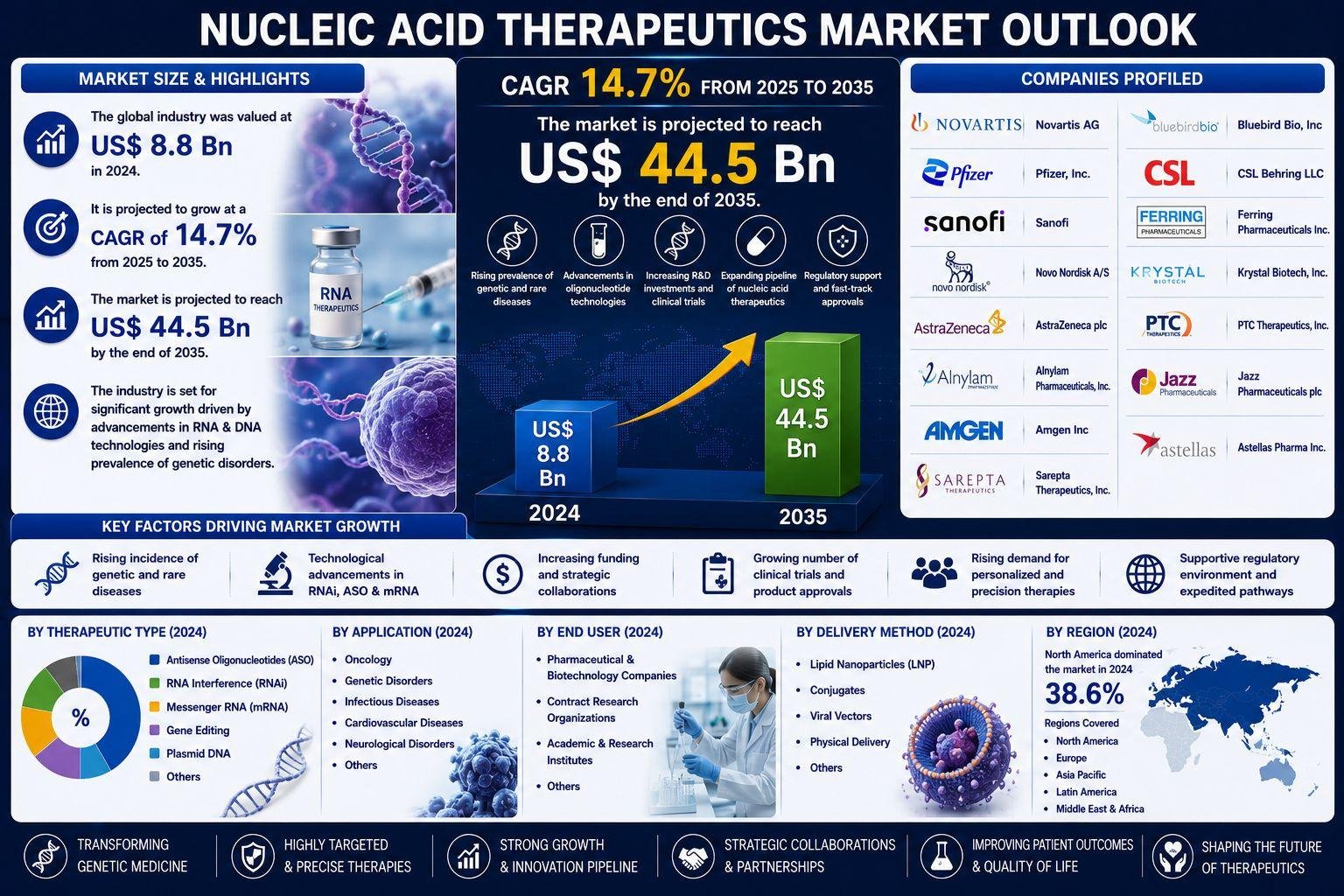
The global Nucleic Acid Therapeutics Market is witnessing remarkable growth as advances in gene editing, RNA therapeutics, and precision medicine continue to reshape the treatment landscape for genetic, rare, and chronic diseases. Unlike conventional pharmaceuticals that primarily manage symptoms, nucleic acid therapeutics target the underlying genetic causes of disease, offering long-term and potentially curative treatment options.
According to the latest market analysis, the global Nucleic Acid Therapeutics Market was valued at US$ 8.8 Billion in 2024 and is projected to reach US$ 44.5 Billion by 2035, expanding at a CAGR of 14.7% from 2025 to 2035.
Growing prevalence of inherited genetic disorders, increasing regulatory support through expedited approval pathways, expanding investments in biotechnology research, and the clinical success of RNA-based medicines are significantly driving market expansion. The widespread recognition of messenger RNA (mRNA) technology following the COVID-19 pandemic has further accelerated research into next-generation nucleic acid therapeutics targeting cancer, neurological diseases, cardiovascular disorders, metabolic diseases, and infectious conditions.
As pharmaceutical companies continue investing in innovative delivery systems and gene-based therapies, the global market is expected to experience sustained double-digit growth throughout the forecast period.
Rising Burden of Genetic Disorders Drives Market Growth
One of the strongest growth drivers for the Nucleic Acid Therapeutics Market is the increasing prevalence of genetic disorders worldwide.
Inherited conditions such as Duchenne muscular dystrophy (DMD), cystic fibrosis, sickle cell disease, hemophilia, Huntington's disease, spinal muscular atrophy, and thalassemia continue to affect millions of patients globally.
Improved genetic screening technologies, prenatal diagnostics, and next-generation sequencing have significantly increased the identification of rare genetic disorders that previously remained undiagnosed.
Earlier diagnosis allows physicians to begin treatment before irreversible disease progression occurs, creating stronger demand for advanced genetic medicines.
Unlike conventional therapies that only alleviate symptoms, nucleic acid therapeutics directly target faulty genes or abnormal RNA responsible for disease development.
Gene replacement therapies introduce functional copies of defective genes, while RNA-based medicines regulate gene expression, silence harmful proteins, or restore missing proteins required for normal cellular function.
As healthcare systems increasingly adopt precision medicine approaches, demand for targeted nucleic acid therapeutics continues rising rapidly.
Regulatory Support Accelerates Commercialization
Supportive regulatory policies have become another major catalyst supporting the rapid expansion of the Nucleic Acid Therapeutics Market.
Global regulatory agencies including the U.S. Food and Drug Administration (FDA), European Medicines Agency (EMA), and other national health authorities have introduced several expedited approval programs designed specifically for therapies addressing serious diseases with significant unmet medical needs.
Programs such as Fast Track Designation, Breakthrough Therapy Designation, Priority Review, and Accelerated Approval enable promising nucleic acid therapies to reach patients much faster than traditional drug development pathways.
Many gene therapies, RNA interference treatments, and antisense oligonucleotide therapies have benefited from these regulatory initiatives because they target life-threatening rare diseases with limited treatment alternatives.
Faster regulatory reviews reduce commercialization timelines, encourage research investment, and improve patient access to innovative therapies.
As governments continue supporting rare disease research and personalized medicine initiatives, regulatory frameworks are expected to further stimulate global market expansion.
RNA Technologies Continue Transforming Modern Medicine
RNA-based therapeutics have emerged as one of the fastest-growing areas within biotechnology.
Messenger RNA (mRNA), small interfering RNA (siRNA), antisense oligonucleotides (ASOs), and microRNA technologies are demonstrating enormous clinical potential across multiple therapeutic areas.
The remarkable success of mRNA vaccines during the COVID-19 pandemic validated RNA technology on a global scale and significantly increased investment in nucleic acid research.
Today, pharmaceutical companies are actively developing RNA-based therapies for cancer immunotherapy, cardiovascular diseases, metabolic disorders, neurological diseases, infectious diseases, and rare inherited conditions.
Small interfering RNA therapies selectively silence disease-causing genes, while antisense oligonucleotides regulate RNA processing and protein production.
These precision medicines enable treatment of diseases previously considered difficult or impossible to manage using traditional pharmaceutical approaches.
Continuous improvements in RNA stability, delivery technologies, and manufacturing capabilities continue strengthening commercial opportunities within the market.
Advancements in Drug Delivery Improve Clinical Success
Efficient delivery of nucleic acid therapeutics remains one of the industry's most important technological priorities.
Nucleic acids are naturally unstable molecules that require specialized delivery systems to reach target tissues while avoiding rapid degradation within the human body.
Researchers continue developing advanced viral and non-viral delivery platforms capable of improving treatment efficacy while minimizing adverse effects.
Adeno-associated virus (AAV) vectors remain widely used for gene therapy applications due to their strong safety profile and efficient gene transfer capabilities.
Simultaneously, lipid nanoparticles, polymer-based carriers, lipid conjugates, and other non-viral delivery technologies are expanding treatment possibilities across numerous therapeutic areas.
Improved delivery systems enhance tissue specificity, increase therapeutic effectiveness, reduce toxicity, and broaden the range of diseases treatable through nucleic acid medicines.
Ongoing innovation in delivery technologies is expected to remain one of the key growth drivers throughout the forecast period.
Personalized Medicine Creates Significant Market Opportunities
The global transition toward personalized medicine is creating substantial opportunities for nucleic acid therapeutics.
Modern healthcare increasingly emphasizes treatments tailored to individual genetic profiles rather than standardized therapies designed for broad patient populations.
Genomic sequencing, biomarker discovery, and molecular diagnostics now enable physicians to identify disease-causing mutations with exceptional precision.
This allows pharmaceutical developers to design highly targeted therapies addressing specific genetic abnormalities responsible for disease progression.
Personalized nucleic acid therapeutics improve treatment outcomes while reducing unnecessary exposure to ineffective medications.
The expanding availability of precision diagnostics further supports broader clinical adoption of gene therapies, RNA therapeutics, and other personalized treatment strategies.
As personalized healthcare continues becoming mainstream, nucleic acid therapeutics are expected to play an increasingly central role in future medical practice.
Antisense Oligonucleotides Lead the Therapy Segment
Based on therapy type, Antisense Oligonucleotides (ASOs) represented the leading segment of the global Nucleic Acid Therapeutics Market in 2024.
ASOs are short synthetic nucleic acid molecules specifically designed to bind targeted messenger RNA sequences, allowing precise regulation of gene expression.
These therapies can suppress production of harmful proteins, modify RNA splicing, or promote degradation of disease-causing RNA molecules.
Clinical success across neurological disorders, rare genetic diseases, and metabolic conditions has established ASOs as one of the most mature and commercially successful categories within nucleic acid therapeutics.
Continuous improvements in molecular stability, chemical modifications, delivery technologies, and manufacturing efficiency continue expanding clinical applications for antisense therapies.
Growing research investments and increasing regulatory approvals are expected to maintain ASOs' leading market position throughout the forecast period.
North America Dominates the Global Market
North America remains the largest regional market for nucleic acid therapeutics.
The region benefits from a highly developed biotechnology ecosystem, strong pharmaceutical research infrastructure, substantial research funding, favorable regulatory support, and extensive clinical trial activity.
The United States hosts many of the world's leading biotechnology companies actively developing gene therapies, RNA therapeutics, and precision medicines.
Close collaboration between pharmaceutical manufacturers, academic research institutions, government agencies, and healthcare providers continues accelerating innovation across the region.
Supportive FDA regulatory initiatives, expanding genomic medicine programs, and increasing adoption of personalized healthcare further strengthen North America's leadership position.
Meanwhile, Europe continues experiencing steady growth through strong biotechnology investments and regulatory support, while Asia Pacific is expected to emerge as the fastest-growing regional market owing to expanding healthcare infrastructure, increasing biotechnology research, and rising investments in precision medicine.
Competitive Landscape
The global Nucleic Acid Therapeutics Market remains highly competitive, with leading biotechnology and pharmaceutical companies investing heavily in research, clinical development, manufacturing expansion, strategic acquisitions, and collaborative partnerships.
Major companies operating in the market include Novartis AG, Pfizer Inc., Sanofi, Novo Nordisk A/S, AstraZeneca plc, Alnylam Pharmaceuticals Inc., Amgen Inc., Sarepta Therapeutics Inc., Bluebird Bio Inc., CSL Behring LLC, Ferring Pharmaceuticals Inc., Krystal Biotech Inc., PTC Therapeutics Inc., Jazz Pharmaceuticals plc, and Astellas Pharma Inc.
These organizations continue strengthening their product pipelines through innovations in gene therapy, RNA interference technology, antisense oligonucleotides, messenger RNA therapeutics, and advanced delivery platforms.
Strategic licensing agreements, acquisitions, manufacturing capacity expansion, and clinical collaborations remain key competitive strategies across the industry.
Recent Industry Developments
Several important developments continue shaping the global Nucleic Acid Therapeutics Market.
In November 2024, Novartis completed the acquisition of Kate Therapeutics, a biotechnology company specializing in adeno-associated virus (AAV)-based gene therapies for genetically defined neuromuscular diseases. The acquisition significantly expands Novartis' gene therapy pipeline and strengthens its position within genetic medicine.
During the same month, Sarepta Therapeutics entered a global licensing agreement with Arrowhead Pharmaceuticals covering multiple siRNA programs targeting muscle disorders, central nervous system diseases, and rare pulmonary conditions. The agreement included substantial upfront payments and strategic investment supporting continued development of RNA-based therapeutics.
Future Outlook
The future outlook for the global Nucleic Acid Therapeutics Market remains exceptionally strong as precision medicine continues transforming disease treatment worldwide.
Increasing prevalence of genetic disorders, expanding applications of RNA therapeutics, continued regulatory support, and significant biotechnology investment are expected to sustain rapid market growth through 2035.
Advances in gene editing, next-generation delivery technologies, artificial intelligence-driven drug discovery, and genomic diagnostics will continue expanding therapeutic possibilities for previously untreatable diseases.
As clinical success rates improve and manufacturing technologies mature, nucleic acid therapeutics are expected to become one of the most important pillars of modern medicine, delivering highly personalized, disease-modifying treatments across numerous therapeutic areas while driving substantial long-term growth in the global healthcare industry.
