

How Does Compositemould Prepreg Mould Support Composite Manufacturing Projects
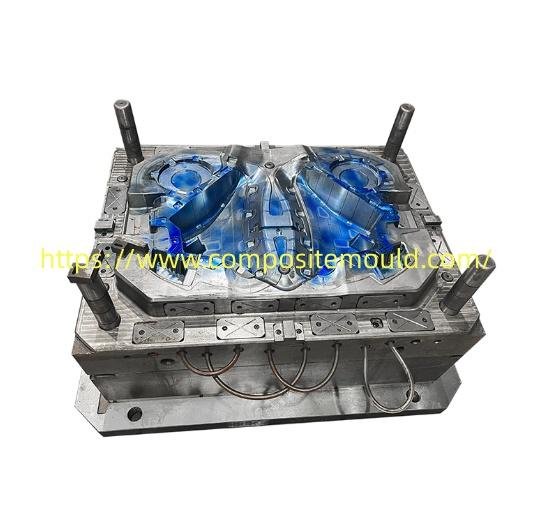
Prepreg Mould plays an important role in composite manufacturing because it provides the tooling foundation for shaping prepreg materials into finished components with controlled dimensions and consistent quality. Industries such as aerospace, automotive, marine, rail transportation, renewable energy, sporting equipment, and industrial engineering increasingly rely on composite technologies to meet evolving design requirements. Carefully designed tooling supports efficient production while helping manufacturers maintain organized processing throughout each project.
Understanding Prepreg Composite Technology
Prepreg materials consist of reinforcement fibers that are pre-impregnated with resin under controlled manufacturing conditions. These materials are prepared before the molding process and are typically cured under carefully managed temperature and pressure.
Tooling designed for prepreg production must accommodate material placement, vacuum processing, thermal expansion, and curing requirements. Engineering accuracy during tooling development directly influences dimensional consistency and surface quality throughout manufacturing.
As composite applications continue expanding, suitable tooling becomes an essential part of successful production planning.
Why Tooling Design Matters
Composite components often feature complex geometries that require accurate engineering and detailed machining.
During development, engineering teams evaluate product drawings, laminate structures, curing conditions, dimensional tolerances, material characteristics, and production objectives before determining tooling specifications.
Careful design allows manufacturers to improve material positioning, simplify assembly processes, and support stable production from prototype development through larger manufacturing programs.
Early engineering review also helps reduce unnecessary adjustments during later production stages.
Applications Across Multiple Industries
Composite materials are widely used because they support different engineering requirements across many industries.
Typical applications include aircraft interior structures, automotive body panels, railway equipment, marine products, wind energy components, industrial machinery, medical equipment, and sporting goods.
Each application requires tooling adapted to specific product dimensions, manufacturing processes, and production quantities. Flexible engineering allows these different requirements to be addressed efficiently throughout project development.
Precision Machining Supports Reliable Production
High-quality tooling depends on accurate machining throughout every production stage.
Processing commonly includes CNC machining, fitting, polishing, assembly, inspection, and final verification before delivery. Each stage contributes to dimensional consistency and stable production performance.
Inspection procedures help verify cavity dimensions, assembly accuracy, and overall tooling quality before production begins. Organized manufacturing management also supports repeatable processing across multiple production cycles.
Project Communication Improves Development
Successful tooling projects rely on cooperation between engineering teams and customers from the earliest planning stage.
Technical discussions usually include product drawings, laminate structures, curing methods, production schedules, inspection arrangements, and delivery planning. Maintaining regular communication allows project adjustments to be handled efficiently while supporting organized development.
Clear project coordination also helps customers prepare for prototype testing and future production expansion.
Why Customers Choose Compositemould
Compositemould provides engineering design, precision machining, customized tooling development, and project coordination for composite manufacturing applications across multiple industries.
The company works closely with customers throughout every project stage, from drawing evaluation to tooling completion, while supporting customized engineering requirements and organized manufacturing procedures. Through practical communication and flexible production planning, Compositemould helps customers develop tooling solutions suited to different composite applications and production objectives.
Composite manufacturing continues evolving as industries introduce increasingly advanced product designs and engineering requirements. Careful tooling development supports production efficiency, dimensional consistency, and long-term manufacturing planning. Companies seeking customized composite tooling solutions can learn more about available products by visiting https://www.compositemould.com/product/
 English