

Aqualyx Injections in Dubai for Localized Fat Reduction
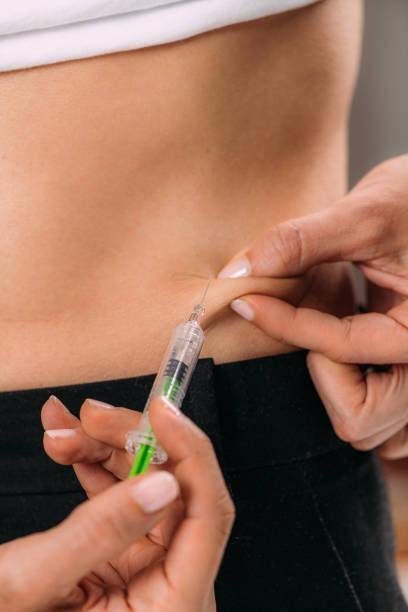
The term "localized fat" is key to understanding who benefits from this treatment and who does not. It refers to fat that is confined to a specific, well-defined area, not distributed diffusely across a region. This distinction is the single most important factor in predicting a successful outcome. Using Aqualyx Injections in Dubai for localized fat reduction means identifying those discrete pockets that can be isolated, injected, and resolved with precision.
Defining Localized Versus Generalized Fat
The difference between localized and generalized fat is not merely semantic. It determines the entire treatment approach and the likelihood of satisfaction.
The Characteristics of Localized Fat
Localized fat presents as a distinct, palpable pocket. When you pinch the area between your thumb and forefinger, you can feel a defined mass of tissue that is separate from the surrounding anatomy. The skin over it is otherwise normal. The area around it is leaner. This contrast is what makes the pocket noticeable and bothersome.
Common examples include a central submental fat pad that creates a double chin even in a person with a lean face, a small collection of fat on the inner knees that persists despite a slender build, or a discrete roll of fat just below the bra line that remains regardless of overall body fat percentage.
These localized pockets are the ideal treatment targets because they can be injected in their entirety. The product can be distributed throughout the entire fat pad, ensuring uniform destruction and smooth results.
The Characteristics of Generalized Fat
Generalized fat is distributed more broadly. There is no discrete pocket to pinch; the entire region is uniformly thick. This is typical of patients with a higher overall body fat percentage. The abdomen is not just full in one spot; it is full across its entire surface. The thighs are not just heavy on the inner aspect; they are heavy circumferentially.
Treating generalized fat with localized injections is ineffective and inappropriate. The volume of product required would be excessive and potentially unsafe. The result would be uneven, with some areas of the treated region responding and others not, creating an irregular, dimpled contour.
An honest practitioner performs a careful physical examination and tells you directly whether your fat is localized or generalized. This honesty may disappoint in the moment, but it protects you from spending money on a treatment that cannot deliver what you seek.
The Assessment Process for Localized Fat
Determining whether your fat is truly localized requires more than a glance in the mirror. It requires a hands-on physical examination by an experienced practitioner.
The Pinch Test and What It Reveals
The pinch test is the cornerstone of the assessment. The practitioner gently grasps the skin and underlying fat between their thumb and forefinger and lifts it away from the underlying muscle. This simple maneuver reveals several critical pieces of information.
What the pinch test assesses:
-
Fat thickness: How many centimeters of tissue can be pinched? Very thin fat pads may not be suitable because the risk of injecting too superficially or too deep is higher.
-
Fat localization: Is the fat confined to a discrete pocket, or does it blend diffusely into the surrounding tissue? A well-defined pocket has clear boundaries.
-
Skin elasticity: When the pinch is released, how quickly does the skin snap back? Slow recoil suggests reduced elasticity, which may affect the final contour.
-
Underlying muscle: Can the fat be cleanly separated from the muscle beneath? If the fat and muscle are tethered together, injection into the correct plane is more difficult.
-
Presence of fibrous septae: Does the fat feel smooth and uniform, or are there fibrous bands running through it? Fibrous fat is more resistant to uniform product distribution.
The Importance of Photographic Documentation
Standardized photographs are an essential part of the assessment. They provide a baseline against which progress can be measured. They also protect both you and the practitioner by documenting exactly what was present before treatment.
Photographs should be taken in consistent lighting, from multiple angles, and with the area both relaxed and contracted if relevant. For submental treatment, a profile view with the chin in a neutral position is particularly important. For body areas, front, side, and oblique views are standard.
The Injection Strategy for Localized Pockets
Treating a localized pocket requires a strategy that ensures the product reaches all the targeted fat cells while avoiding surrounding structures.
Mapping the Treatment Area
Before the first injection, the practitioner marks the boundaries of the fat pocket on your skin. This is done with you in a position that makes the pocket most visible, often standing for body areas or sitting upright for submental treatment. The markings create a visual grid that guides the injection pattern.
The grid ensures that every part of the pocket receives treatment. Gaps in the grid would leave untreated fat cells behind, creating an uneven result. Overlap is avoided because excessive product in one area can cause over-treatment and an unnatural depression.
The Depth and Distribution
The needle must be placed at the correct depth within the fat layer. Too superficial, and the skin is at risk. Too deep, and the product enters the muscle, where it is ineffective and potentially damaging.
The practitioner uses a fanning technique, inserting the needle to the deepest part of the fat pad and depositing small aliquots of product as the needle is slowly withdrawn. This creates a column of product distribution from deep to superficial within the fat, ensuring that fat cells at all levels are exposed.
For a localized pocket, this technique is repeated at each marked point on the grid. The total volume injected is calculated based on the size of the pocket, staying within the safe maximum dose for the session.
Aftercare Specific to Localized Treatment
Aftercare for a localized pocket is generally straightforward, but it requires consistency.
Supporting the Treated Area
The treated pocket will swell, firm up, and become tender. This is localized inflammation, and it is the desired response. You must protect the area from pressure, friction, and extreme temperatures for the first few days.
For body areas, compression garments help control swelling and provide comfort. For the submental area, avoiding tight collars or necklaces is advisable. Gentle movement is encouraged, but strenuous exercise should be avoided for at least 48 to 72 hours.
Monitoring the Resolution
Over the following weeks, the firmness gradually softens, and the swelling subsides. The pocket should become noticeably smaller by week six to eight. At this point, you and your practitioner reassess. If residual fat remains and further reduction is desired, another session can be scheduled. If the result is satisfactory, the treatment course is complete.
