

Food Security and Precision Ag: Trends in Crop Protection Chemicals 2036
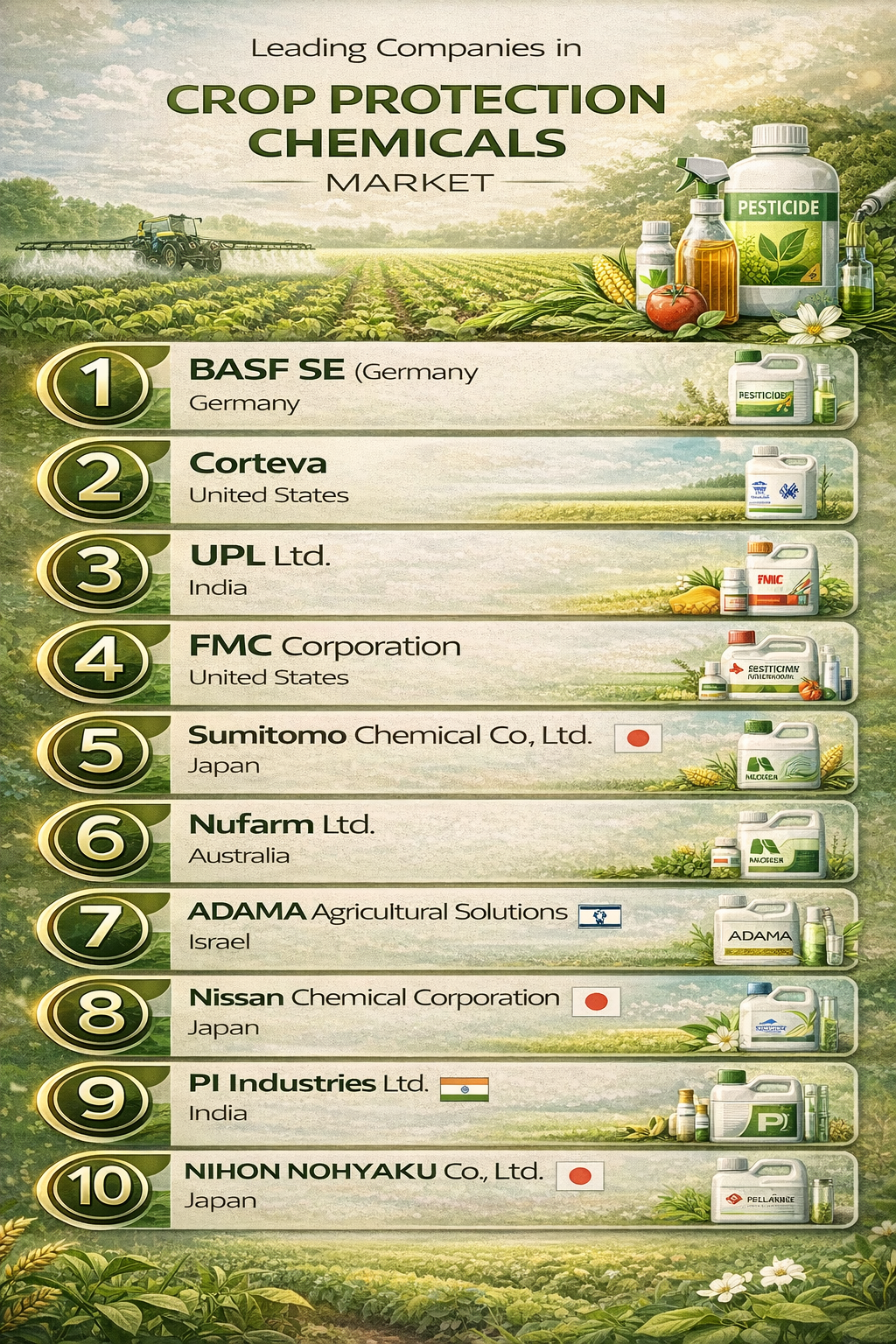
The global crop protection chemicals market is undergoing a structural shift from traditional volume-heavy chemistries to high-efficiency, targeted formulations. As the global population heads toward a projected 9.8 billion by 2050, the agricultural sector faces the dual challenge of maximizing yields on shrinking arable land while navigating the unpredictable pest and disease cycles accelerated by climate change.
The global crop protection chemicals market size was valued at US$ 76.3 Billion in 2025 and is projected to reach US$ 140.5 Billion by 2036, expanding at a CAGR of 5.7% from 2026 to 2036.
- Primary Growth Drivers: Yield Optimization and Food Security
The climb toward a US$ 140.5 Billion valuation is underpinned by the urgent need for agricultural intensification:
- Shrinking Arable Land: Industrialization and soil degradation are reducing the available land per capita. Crop protection chemicals are essential for "vertical" yield growth—getting more produce from the same acreage.
- Climate-Driven Pest Migration: Rising global temperatures are expanding the geographical range of pests and fungi into temperate zones where crops have little historical resistance, necessitating new chemical management protocols.
- Post-Harvest Loss Prevention: Effective chemical application not only protects the standing crop but also improves the uniformity and shelf life of produce, which is critical for meeting the stringent quality standards of export-oriented horticulture.
- Technological Evolution: Precision and Biologicals
By 2036, the market is defined by "smarter" applications that prioritize environmental stewardship and resistance management.
- Rise of Biopesticides: While synthetic chemicals still dominate, biopesticides are the fastest-growing segment. Derived from natural materials (bacteria, plants, minerals), they are becoming central to Integrated Pest Management (IPM) strategies to reduce chemical residues.
- Precision Agriculture Integration: Integration with GPS-guided sprayers and field sensors allows for Variable-Rate Application (VRA). Instead of blanket-spraying fields, farmers can apply chemicals only where infestations are detected, reducing costs and environmental runoff.
- Advanced Formulation Technology: Innovations in Microencapsulated (CS) and Suspension Concentrate (SC) formulations allow for the slow, controlled release of active ingredients, extending the duration of protection and reducing the frequency of application.
- Key Market Segments: Herbicides and Staple Crops
- Herbicides (Market Leader): Accounting for the largest share (approx. 41-44%), herbicides are indispensable for large-scale cereal and grain cultivation. Weed management remains the most labor-intensive part of farming, making chemical control a cost-effective necessity.
- Cereals & Grains (Dominant Crop): This segment represents over 40% of the market value. Staple crops like wheat, rice, and corn are high-volume consumers of fungicides and insecticides due to their critical role in global food security.
- Foliar Application: This remains the most popular mode of application due to its ease of use and rapid action, though seed treatment is gaining significant traction as a proactive, low-volume alternative.
- Regional Outlook: The APAC and Latin American Powerhouses
- Asia-Pacific (The Growth Engine): Currently the largest and fastest-growing region. Massive agricultural bases in China and India are modernizing rapidly, with government support for high-yield farming practices and a shift toward high-value horticulture.
- Latin America: A dominant force in global exports, particularly for soybeans, sugarcane, and coffee. The region's reliance on large-scale commercial farming ensures a steady demand for high-performance herbicides and insecticides.
- North America & Europe: These mature markets are focusing on the premiumization of crop protection, with a heavy emphasis on regulatory compliance, residue management, and the rapid adoption of digital farming tools.
Conclusion: From Defense to Resilience
Reaching a valuation of US$ 140.5 Billion by 2036 signifies that crop protection is no longer a reactive "emergency" measure but a foundational component of sustainable food systems. The industry's future lies in targeted chemistry—products that are highly toxic to pests but benign to the surrounding ecosystem—ensuring that the drive for record-breaking yields does not come at the cost of long-term soil and water health.
