

US$ 68.7 Billion Projection: Global 3D Radar Market Strategic Analysis and Volumetric Tracking Forecast to 2036
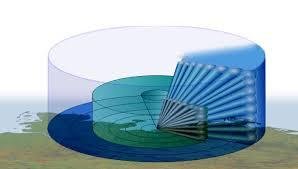
The global 3D radar market is undergoing a rapid technological evolution, transitioning from traditional defense monitoring into an essential backbone for complex, multi-domain volumetric tracking. Unlike traditional 2D systems that only provide range and azimuth (bearing), 3D radar integrates critical elevation data in real time. This capability is vital for identifying modern, agile airborne threats and coordinating intricate civilian airspace operations.
The global 3D radar market was valued at US$ 21.5 Billion in 2025 and is projected to reach US$ 68.7 Billion by 2036, expanding at a high compound annual growth rate (CAGR) of 11.1% from 2026 to 2036.
- Primary Market Drivers: The Drone Threat and Defense Overhauls
The projected surge to US$ 68.7 Billion by 2036 reflects an intense acceleration in global security investments and structural upgrades:
- The Proliferation of Counter-UAS (Unmanned Aircraft Systems) Demands: The widespread deployment of low-cost, low-observable loitering munitions and small commercial drones has changed contemporary warfare. Standard 2D surveillance struggles to separate these low-altitude, slow-moving targets from ground clutter. 3D radar systems solve this by calculating highly precise elevation tracks, making them the cornerstone of modern Counter-UAS infrastructure.
- Widespread Military Modernization Initiatives: Global defense spending is reaching historical highs. Military organizations are aggressively phasing out legacy radar systems in favor of Active Electronically Scanned Array (AESA) technologies. These solid-state 3D radars enable continuous, multi-target tracking across severe weather conditions and electronically congested environments.
- The Emergence of Urban Air Mobility (UAM): Looking toward the next decade, the commercialization of air taxis and autonomous cargo drones requires entirely new civilian airspace management architectures. Traditional air traffic control cannot handle the density of low-altitude urban routes, pushing city planning and aviation authorities to invest heavily in specialized, short-range 3D radar networks.
- Segment Highlights: Ground Systems Lead, Hardware Rules the Value
Analyzing the structural components of the market reveals how buyers are allocating capital:
- Ground-Based Systems Command the Majority Share: Ground-based platforms captured roughly 45.5% of the market share. Their dominance is sustained by massive, long-range ballistic missile defense installations, stationary border surveillance outposts, and tactical mobile units deployed for localized air defense.
- Airborne Platforms Post the Fastest Gains: The airborne segment is accelerating at an impressive pace. This rapid expansion is fueled by the integration of scaled-down, high-frequency 3D radar systems onto fifth-generation fighter jets and medium-altitude long-endurance (MALE) military drones to maximize their "look-down" targeting capabilities.
- Hardware Captures Over 70% of Initial Costs: High-performance hardware—specifically GaN (Gallium Nitride) semiconductor transmit-receive modules, complex beamforming antenna arrays, and advanced digital signal processors—accounts for the lion's share of market revenue. However, software is the fastest-growing sub-segment, as military and civil entities deploy AI-driven target discrimination algorithms to filter out environmental noise.
- Regional Dynamics: Strong North American Budgets and Rapid Asia-Pacific Adoption
- North America (The Largest Regional Market): North America continues to lead global market value, sustained by the massive research, development, and procurement budgets of the U.S. Department of Defense. The presence of aerospace giants like RTX Corporation, Northrop Grumman, and Lockheed Martin ensures the region remains at the cutting edge of 3D sensing innovation.
- Asia-Pacific (The Fastest-Growing Theater): Driven by escalating geopolitical friction and maritime territorial disputes, the Asia-Pacific region is experiencing the fastest growth rate. India, China, and South Korea are heavily prioritizing domestic defense manufacturing, pushing localized production of AESA-based 3D radar configurations for naval surface vessels and border installations.
- Europe (The Compliance and Security Core): European procurement is heavily focused on integrated air defense systems and civilian Air Traffic Management (ATM) overhauls. Tightening Euro-NCAP regulations and airspace crowdedness are forcing a dual-use focus on 3D radar technology for both military security and commercial transportation infrastructure.
Key Industry Restraints
Despite soaring demand, market expansion faces challenges due to extreme technical complexity and restrictive export controls. Developing high-frequency, long-range 3D systems demands substantial upfront R&D investments, creating high barriers to entry for smaller firms. Furthermore, because these systems represent top-tier tactical capabilities, strict regulatory frameworks (such as ITAR in the United States) tightly limit global technology transfers, keeping the market concentrated among a select group of established aerospace and defense primes.
