

Animal Lick Salt: Choosing the Right Salt Block for Horses, Cattle, and Deer
A salt block may look like a simple farm product, but choosing the right one can make daily animal care easier. Animal lick salt gives livestock access to salt in a form that is easy to place in stables, barns, paddocks, and grazing areas.
Different animals need different setups. A horse in a stable may need a wall-mounted block. Cattle in a field may need several larger blocks. Deer may visit a mineral source outdoors, but local rules should always be checked first.
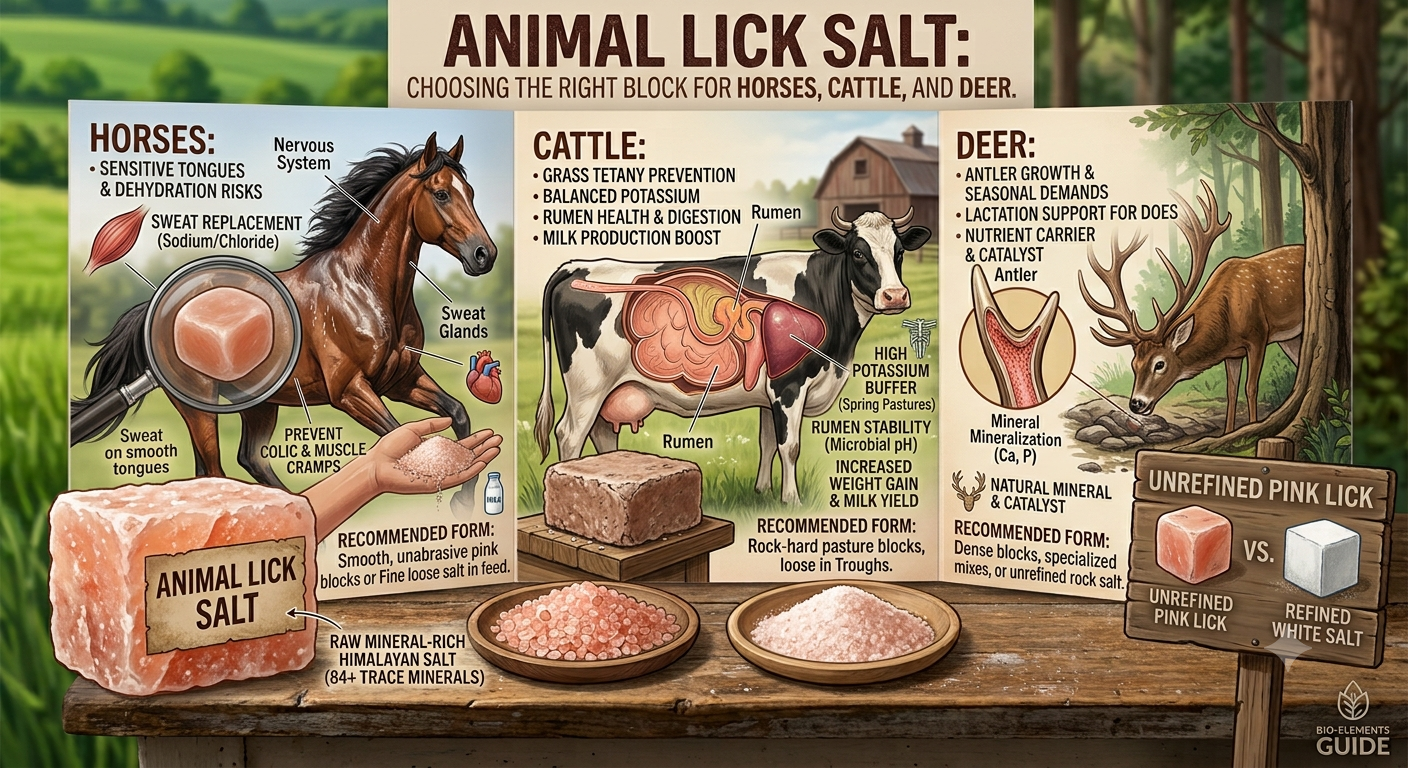
This guide explains how to select, place, and care for animal lick salt for horses, cattle, and deer.
What Is Animal Lick Salt?
Animal lick salt is a hard block of salt made for livestock and animal use. It is designed for animals to lick gradually as part of their normal feeding routine.
These blocks are available in several shapes, including square blocks, bricks, and a salt lick round rock style. Natural Himalayan salt blocks may have pink, orange, white, or reddish shades because they come from natural rock salt deposits.
A salt block should be clearly labeled for animal use. It is not the same as edible salt, bath salt, lamp salt, or industrial salt.
You can explore natural livestock salt products in our Lick Salts category.
Why Salt Licks Are Used on Farms
Animals receive nutrients from grass, hay, grain, feed mixes, and water. However, the amount of salt available in their normal diet can vary.
Farmers often provide salt licks so animals have access to salt when needed. Salt blocks are easy to manage because animals can lick them over time.
Salt licks should support a complete feeding plan, not replace one. Every animal still needs proper feed, clean water, shelter, and regular health care.
A veterinarian or animal nutrition professional can help if you are unsure about mineral needs for a specific animal.
Salt Lick Round Rock for Outdoor Areas
A salt lick round rock can be a practical choice for outdoor farms and grazing spaces. Its rounded shape can make it easy to place in a holder, mineral feeder, or covered corner of a barn.
Round salt rocks may be useful for horses, cattle, goats, sheep, and other livestock. Choose a block size that suits the number of animals using it.
Keep the salt block above wet ground. Rainwater and mud can soften the salt and make it dirty. A covered holder can help the block last longer.
For larger groups of animals, place more than one block in separate areas. This gives animals easier access and reduces crowding.
Salt Lick for Horses
A salt lick for horses can be placed in a stable, paddock, pasture, or sheltered feeding area. Horses may use salt blocks as part of a balanced care routine, especially when they are active or spending time in warm weather.
A horse salt lick should be kept in a clean holder. Wall-mounted holders are useful in stables because they keep the block off the ground.
Fresh water should always be available. Horses may drink more water after licking salt, so water access is essential.
When choosing salt licks for horses, avoid products not made for animal use. Decorative salt lamps, bath salt, industrial salt, and kitchen salt are not suitable replacements.
Horses and Salt Licks: Practical Daily Care
The topic of horses and salt licks is not only about the salt block itself. It is also about how the block is managed.
Check the holder regularly. Remove dirt, hay, manure, or loose pieces that may collect around the salt. Replace the block when it becomes too small or difficult for the horse to use safely.
If several horses share the same paddock, one salt block may not be enough. Place multiple blocks in different locations to reduce competition.
Observe your horse’s normal behavior. If you notice unusual eating, drinking, or health changes, contact an equine veterinarian.
Salt Lick for Cattle
A salt lick for cattle can be placed in pasture areas, barns, or covered feeding stations. Cattle often share salt blocks, so placement is important.
Choose a block size that suits the herd. Larger herds may need several blocks to avoid crowding and uneven access.
Place blocks in dry locations that are easy to reach. Do not place them near standing water, deep mud, or areas where waste can collect.
Move the block location if the ground becomes damaged. This can help protect the pasture and keep the feeding area cleaner.
Deer Salt Lick: Important Outdoor Considerations
A deer salt lick may attract deer in areas where they naturally travel. A salt lick for deer is often placed near wooded land, food plots, or quiet outdoor spaces.
However, a deer licking salt block should only be used where it is legal. Wildlife rules vary by state, county, and season. Some locations restrict mineral blocks because they can influence deer movement and hunting activity.
Never place salt near roads, driveways, or busy public areas. Salt may attract deer into unsafe traffic zones.
Choose a dry location away from standing water. If wildlife use is allowed, monitor the area and remove the block if it creates safety or environmental concerns.
How to Choose an Animal Salt Lick
The right animal salt lick depends on your animal type, location, and daily care routine.
Before buying, consider:
- The type of animal using the salt block
- The number of animals sharing the block
- Indoor or outdoor placement
- Block size and shape
- Whether you need a holder or feeder
- Local wildlife rules for deer use
- Storage conditions for unused blocks
A simple salt block can work well when it is clean, dry, and easy for animals to reach.
Keeping Salt Licks Clean and Dry
Moisture is the biggest challenge for salt licks. Rain, humidity, mud, and standing water can cause a block to dissolve or become dirty.
Use a salt holder, mineral feeder, or covered shelter whenever possible. Keep the block off the ground and away from manure, feed waste, and wet bedding.
Store unused animal lick salt in a dry, covered area. Keep it away from chemicals, fuel, fertilizers, and cleaning products.
A clean block is safer for animals and lasts longer on the farm.
Our Himalayan Pink Salt Product Categories
Himalayan salt is available in different forms for different purposes. Each category should only be used as intended.
Our Edible Salts are food-grade products for cooking, baking, grilling, seasoning, and food service.
Our Lick Salts are made for livestock, including horses, cattle, goats, sheep, and other farm animals.
Our Bath Salts are designed for bath routines, spa products, foot soaks, and gift sets.
Our Salt Lamps are decorative products for homes, offices, hotels, and retail stores.
Our Industrial Salts are supplied for water treatment, manufacturing, textile work, leather processing, and technical applications.
We also offer Private Labelling for businesses that need custom packaging and branded Himalayan salt products. Visit our Contact Us page to discuss bulk orders and packaging needs.
Final Thoughts
Animal lick salt can support a practical livestock-care routine when it is used responsibly. A clean, dry salt block gives horses, cattle, and other farm animals easy access to salt alongside suitable feed and fresh water.
Choose a salt lick for horses that fits a stable holder, use enough blocks for cattle groups, and check local rules before placing a deer salt lick outdoors.
Explore our Lick Salts range for natural Himalayan salt blocks for farms, stables, animal-care suppliers, and bulk buyers.
Frequently Asked Questions
What is animal lick salt?
Animal lick salt is a salt block made for livestock and animal use.
Can horses use salt licks?
Yes. A salt lick for horses can be placed in a clean holder with fresh water nearby.
How many salt licks do cattle need?
The number depends on herd size. Larger groups usually need several blocks in separate areas.
Can I use a deer salt lick anywhere?
No. Check local wildlife laws before placing a deer salt lick outdoors.
How do I keep a horse salt lick dry?
Use a wall holder, covered feeder, or sheltered area away from rain and mud.
