

6 Signs Your Home's Wiring Is Older Than It Should Be
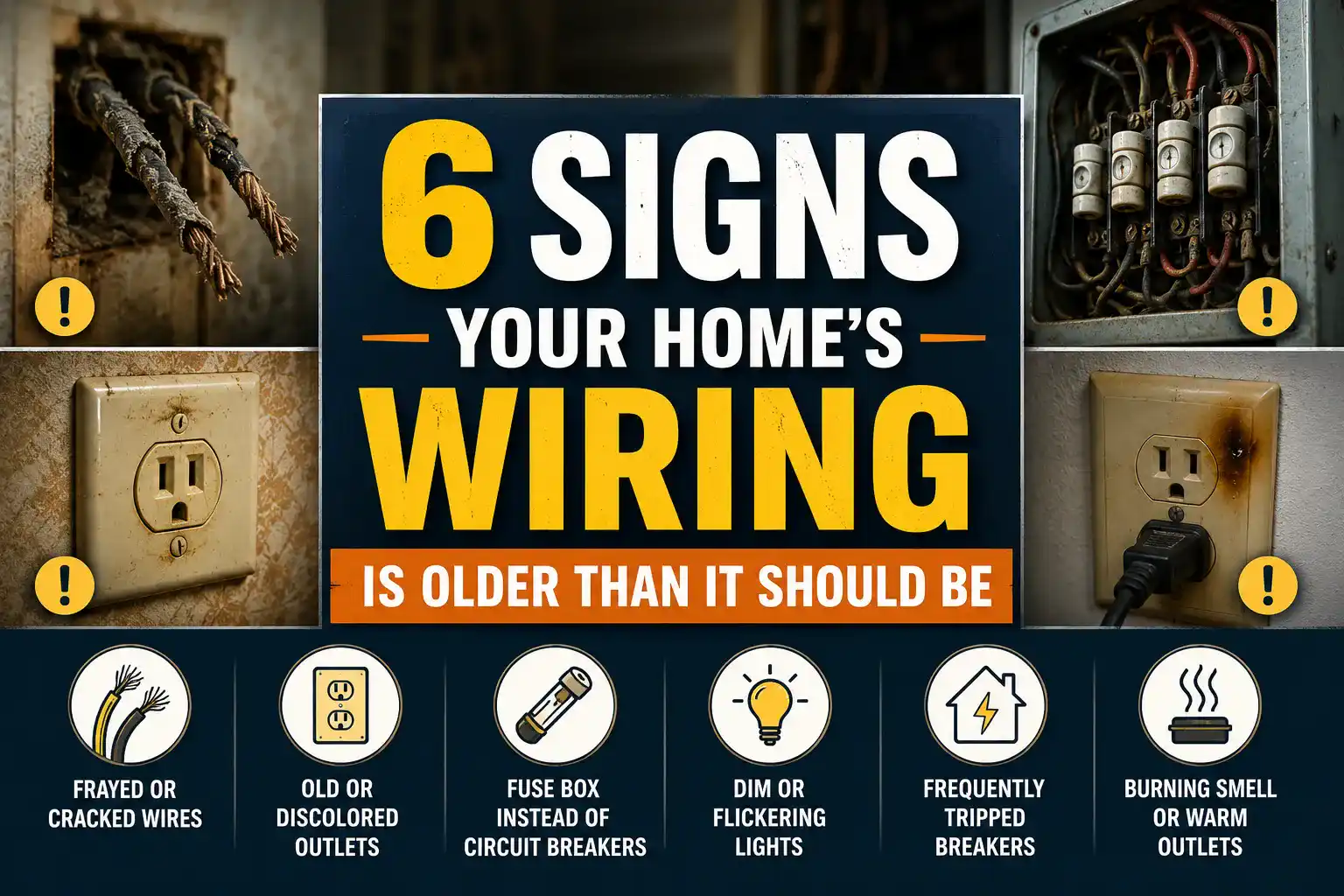
Electrical systems don't usually fail all at once. They fail slowly, in small warning signs that homeowners tend to explain away for months, sometimes years before something forces the issue. A flickering light gets blamed on the bulb. A warm outlet gets ignored because nothing's actually happened yet. A breaker that trips twice a week becomes background noise.
The problem is that electrical wear doesn't wait for a convenient time to become a real issue. Here's what to actually watch for, and what it usually means when you see it.
1. Breakers That Trip More Than Occasionally
Every home trips a breaker now and then that's what breakers are for. But if the same breaker is tripping weekly, or if you've started unplugging one appliance to run another, that's not a coincidence. It's usually a sign the circuit is carrying more load than it was designed for, which was common in homes built before central air, multiple TVs, and a house full of chargers became the norm.
2. Outlets or Switch Plates That Feel Warm
An outlet or switch plate should never feel warm to the touch. If one does, stop using it and have it looked at. Warmth usually points to loose connections or wiring that's degrading internally, both of which are early indicators of a fire risk, not just a minor annoyance.
3. Lights That Flicker or Dim When Something Else Turns On
If your lights dim every time the microwave or air conditioner kicks on, that's your electrical system telling you it's under strain. In a healthy system, appliances draw power without visibly affecting lighting elsewhere in the house. When they don't, it's often a sign that wiring or panel capacity hasn't kept pace with how much the home actually uses.
4. A Persistent Burning Smell With No Obvious Source
This one shouldn't wait for a convenient afternoon. A faint burning or "hot plastic" smell near an outlet, switch, or the electrical panel is one of the more serious warning signs a home can give. It usually means insulation on a wire is breaking down. If you smell it, cut power to that area at the panel if you can do so safely, and call an electrician immediately.
5. Two-Prong Outlets Throughout the House
Homes wired before the 1960s often still have two-prong, ungrounded outlets. Beyond the inconvenience of not being able to plug in modern three-prong devices safely, ungrounded circuits don't offer the same protection against electrical surges and shorts. If most of your outlets are still two-prong, it's a strong sign the wiring behind the walls hasn't been touched in decades.
6. A Fuse Box Instead of a Breaker Panel
If your home still has a fuse box rather than a circuit breaker panel, that alone is worth a professional evaluation. Fuse boxes were largely phased out because they can't handle modern electrical loads as safely or conveniently as breaker panels, and many insurance companies now flag them during underwriting.
What Rewiring Actually Involves and What It Tends to Cost
If a few of these signs sound familiar, the next reasonable question is what a rewire actually involves and what kind of budget to plan for. Rewiring an existing home is a more involved job than wiring new construction, since electricians have to work around finished walls, remove old wiring, and patch drywall afterward all of which affects the total cost.
Because pricing depends heavily on square footage, wall access, and the scope of work involved, it's worth reviewing a detailed breakdown before requesting quotes. This guide on electrical cost per square foot lays out current pricing for new wiring, rewiring, panel upgrades, and individual components like outlets and circuits, which makes it a lot easier to tell whether a contractor's quote is in a reasonable range.
Don't Wait for a Bigger Warning Sign
None of these issues get better on their own, and electrical problems are one of the few home maintenance items where waiting genuinely increases the risk rather than just the cost. If you're noticing more than one of these signs, it's worth having a licensed electrician do a full inspection rather than addressing each symptom individually. Fixing the underlying wiring once is almost always more affordable and safer than patching the same warning sign repeatedly over several years.
