

When Does Zhejianghaiwei Oil Pump-Carbon Fiber Plastic-Drive Shaft Suit Projects
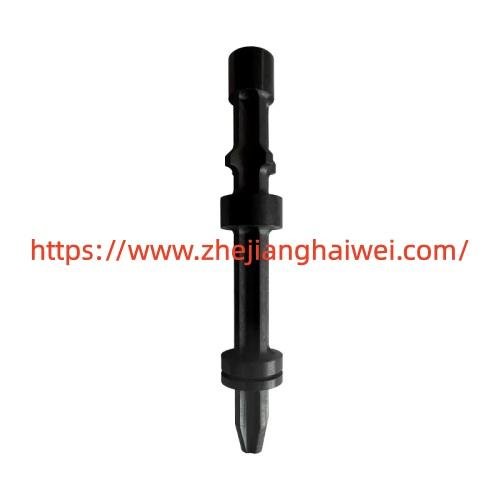
Oil Pump-Carbon Fiber Plastic-Drive Shaft units deliver a set of balanced traits that engineers value when designing modern lubrication systems. The composite construction combines filament reinforcement within a polymer matrix to create a part that transmits rotational force while keeping overall mass low. This balance allows the engine to operate with less effort spent moving internal components and supports smoother response during acceleration phases.
Weight reduction stands out as a core advantage. Traditional metal versions add noticeable bulk that increases inertial load on the crankshaft connection. By contrast the reinforced polymer version cuts that load substantially so the power unit can allocate more output to useful work rather than overcoming its own moving parts. Lower mass also lessens stress on bearings and adjacent fittings which in turn extends the service interval for those related items.
Dimensional stability under heat forms another practical trait. Engine bays routinely reach elevated temperatures yet the material maintains its shape and tolerances across a wide thermal window. This consistency helps preserve precise alignment between the rotating element and the mating gears or rotors. When clearances stay steady fluid flow remains uniform and pressure delivery stays predictable even during prolonged high load periods.
Resistance to chemical attack further improves real world usefulness. Lubricants and residual combustion by products can degrade ordinary metals over time through corrosion or surface pitting. The polymer matrix resists these effects so the surface finish remains intact longer. As a result friction stays controlled and the risk of particulate generation declines which protects downstream filters and passages.
Vibration damping receives attention because rotating assemblies generate harmonic forces. The inherent internal structure of the composite absorbs a portion of those oscillations rather than transmitting them fully into the housing or surrounding structure. Operators notice quieter running and reduced secondary noise that would otherwise travel through the chassis. Over thousands of cycles this damping also lowers fatigue accumulation in connected metal pieces.
Torque capacity remains adequate for the intended duty cycle. Although the part is lighter than steel counterparts it still carries the required twisting force without permanent deformation under normal operating peaks. Careful fiber orientation during manufacture aligns strength along the principal load paths so the component meets design specifications for both continuous and intermittent demand.
Wear characteristics improve because the surface interacts gently with contacting metal parts. Reduced abrasion means the mating components last longer and the need for frequent clearance checks decreases. Maintenance teams therefore schedule fewer unplanned stops and can plan routine inspections around predictable intervals rather than reacting to unexpected wear.
Thermal conductivity stays moderate which helps manage local hot spots. Heat generated at friction interfaces dissipates at a controlled rate rather than concentrating in a narrow zone. This behavior supports stable viscosity of the circulating fluid and reduces the chance of localized degradation that could affect sealing surfaces nearby.
Installation remains straightforward for teams already familiar with conventional replacements. Standard interface dimensions allow the unit to drop into existing housings without extensive redesign of surrounding hardware. Once fitted the part requires no special break in procedure beyond normal system priming and verification of pressure readings.
Across passenger cars light commercial vehicles and selected industrial power units these traits combine to give designers a workable alternative that addresses weight heat corrosion and vibration concerns simultaneously. The result is a component that contributes to overall system efficiency without introducing new complexity into assembly or service routines.
Zhejianghaiwei produces these components with attention to consistent material formulation and dimensional accuracy so each piece meets the stated performance envelope. Teams seeking reliable long term operation can review available options and technical data at https://www.zhejianghaiwei.com/product/ where further specifications support informed selection for specific applications.
