

How to Maintain Your Tissot Watches Women's Line
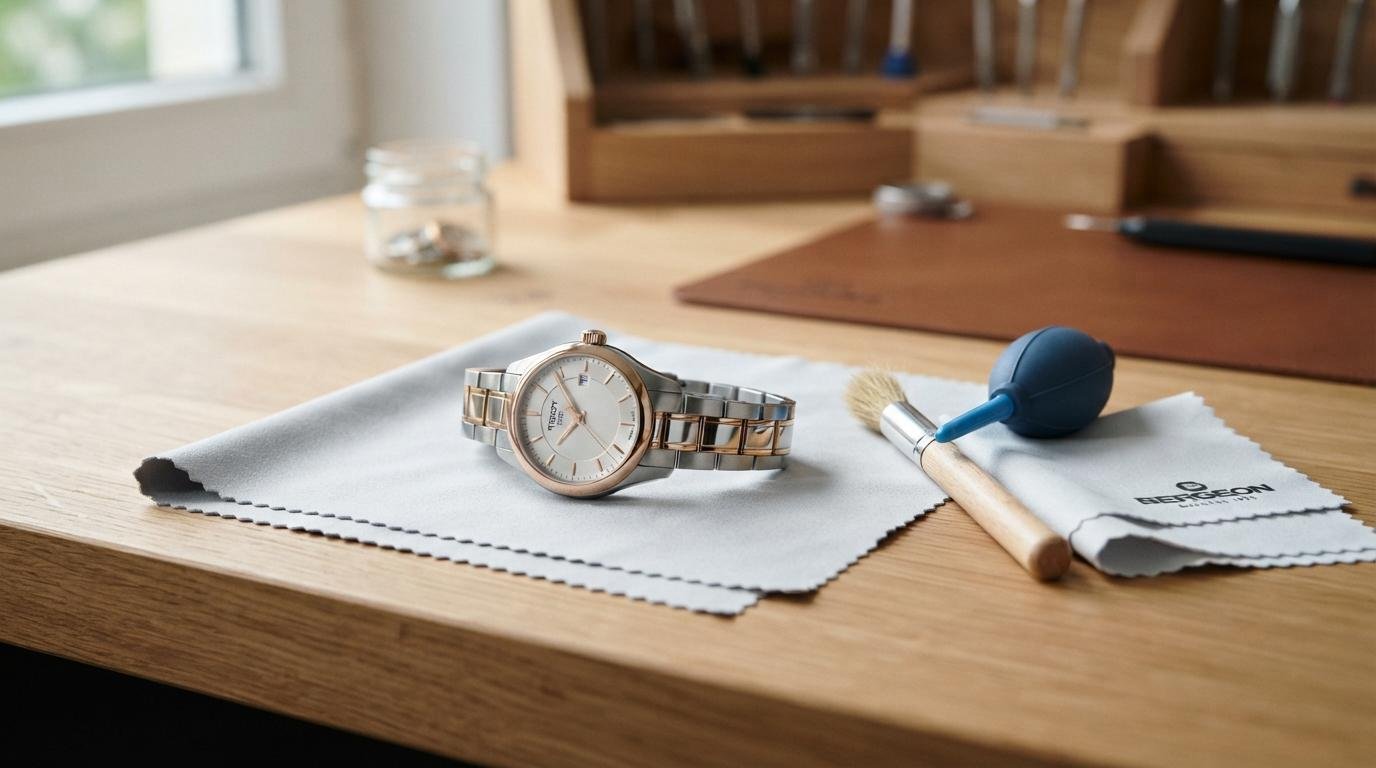
Tissot watches women love to wear are built to last. Swiss craftsmanship, good materials, solid movements. But even a well-made watch needs some basic care. Ignore it long enough and you'll start noticing scratches, a foggy crystal, or a strap that's taken on a life of its own. None of that has to happen.
Maintenance isn't complicated. It's mostly about building a few habits and knowing when to hand it off to someone who knows what they're doing.
Clean It More Often Than You Think
Dirt ends up in spots you really don’t see. Around the crown, under those lugs, and along the strap edges, it just sort of sneaks in. Sweat, lotion, and dust, and then do their little routine every day.
For most Tissot models, you can use a soft cloth and a touch of warm water; that is usually enough. If your watch has solid water resistance, then yes, rinse it under a gentle stream and dry it right after. Just don’t let any water hang out near the crown or linger at the case back, ok?
Skip the cleaning stuff from the store. A lot of those are too aggressive, and they can mess up the finish or dry leather sooner than normal everyday wear would.
If your watch has a metal bracelet, use a soft brush, like an old toothbrush, and work it into the links where grime tends to gather. Go easy. You’re cleaning, not attacking it like a scrub.
Understand the Water Resistance Rating
Tissot rates most of its women’s watches for some level of water resistance. That’s reassuring, but the protection fades little by little. The seals age and wear out, especially if you’re wearing the watch every day.
So if it says 30 meters, it’s more rain and sink-splash territory, not real swimming. A 100-meter rating is for swimming. Still, check your exact model instead of assuming more protection than the number actually promises.
Plan to have the water resistance tested every year or two. Any watchmaker can do it fast. It’s not costly either, and it catches a weak seal before moisture gets inside.
One tiny thing lots of people overlook: the crown. If your model has a screw-down crown, keep it fully screwed in. Leaving it a bit loose cuts the water protection quite a lot even if the watch has a strong rating.
How Tissot Watches Women Are Stored Affects How They Age
Where your watch stays when you’re not wearing it, this matters more than people expect.
The bathroom counter is super common, but it’s kind of not ideal. The humidity is rough on leather, and the movement doesn’t love it long-term either. A watch box or a lined drawer works better. Aim for a place where the temperature stays pretty steady.
Even with sapphire crystal (Tissot uses it across many of their models), scratches still happen from tougher materials. Don’t park the watch beside loose keys, or keep it right next to jewelry that can rub.
If you rotate between a few watches, use a small roll or a padded case so they don’t knock into each other.
Also, magnets are a headache you can avoid. Laptops, speakers, bag clasps with magnetic closures Magnets can mess with the accuracy of a mechanical movement. Quartz watches are less sensitive, but it still isn’t a good idea to keep any watch sitting close to a strong magnet.
Service the Movement on Schedule
This is the part people delay the most. The watch keeps running so it feels like there’s no urgency. But inside a mechanical watch, lubricants dry out over the years. Once that protection is gone, the parts grind against each other and wear accelerates.
Tissot recommends servicing mechanical watches every 3 to 5 years. Quartz models usually need less—mostly a battery swap plus a quick inspection of the seals and general case condition.
When your watch is open anyway, ask your watchmaker to check the water-resistance seals. You’re already paying for the service, and it takes them only a short moment.
Don’t wait until it stops working to bring it in. If you do, the repair is almost always more complicated than a routine service would be.
Take Care of the Strap
Straps take more abuse than the case, and honestly they’re often swapped more than they need to be when people skip basic care.
Leather strap care needs the most attention. Rotate it when you can. Wearing the same leather strap every single day breaks it down faster. Give it a day off and it tends to last noticeably longer. Keep leather away from water. If it gets wet, let it dry naturally, not next to heat. A hairdryer will crack leather pretty fast. A little conditioner, 2 or 3 times a year, helps keep it flexible.
Metal bracelets are easier. A quick wipe removes buildup. If the clasp starts to feel loose, tighten it before a link fails at an inconvenient time.
Rubber or silicone straps are the forgiving kind. Rinse with water, pat dry, and you’re done.
Handle the Crown Carefully
The crown gets used more than any other outside part on a watch. If you yank it out or push it back at a slant, you stress the stem over time.
Always pull and push straight out, straight back in. If it feels stiffer than usual, don’t force it. That stiffness is a signal something needs attention, not a reason to apply more pressure.
Know When to Bring It In
Some things you can handle yourself. Cleaning the case, conditioning the strap, and keeping it stored well. Other things need a watchmaker.
If the watch is consistently running fast or slow, if the date function isn't advancing cleanly at midnight, or if you hear anything rattling inside, take it in. A watchmaker familiar with Tissot can catch small problems before they turn into bigger, more expensive ones.
Tissot watches women wear daily can hold up beautifully for years with the right care. Clean it regularly, store it away from heat and humidity, protect the crown, and service the movement on schedule. It doesn't take much time, and it keeps the watch running and looking the way it should.
